


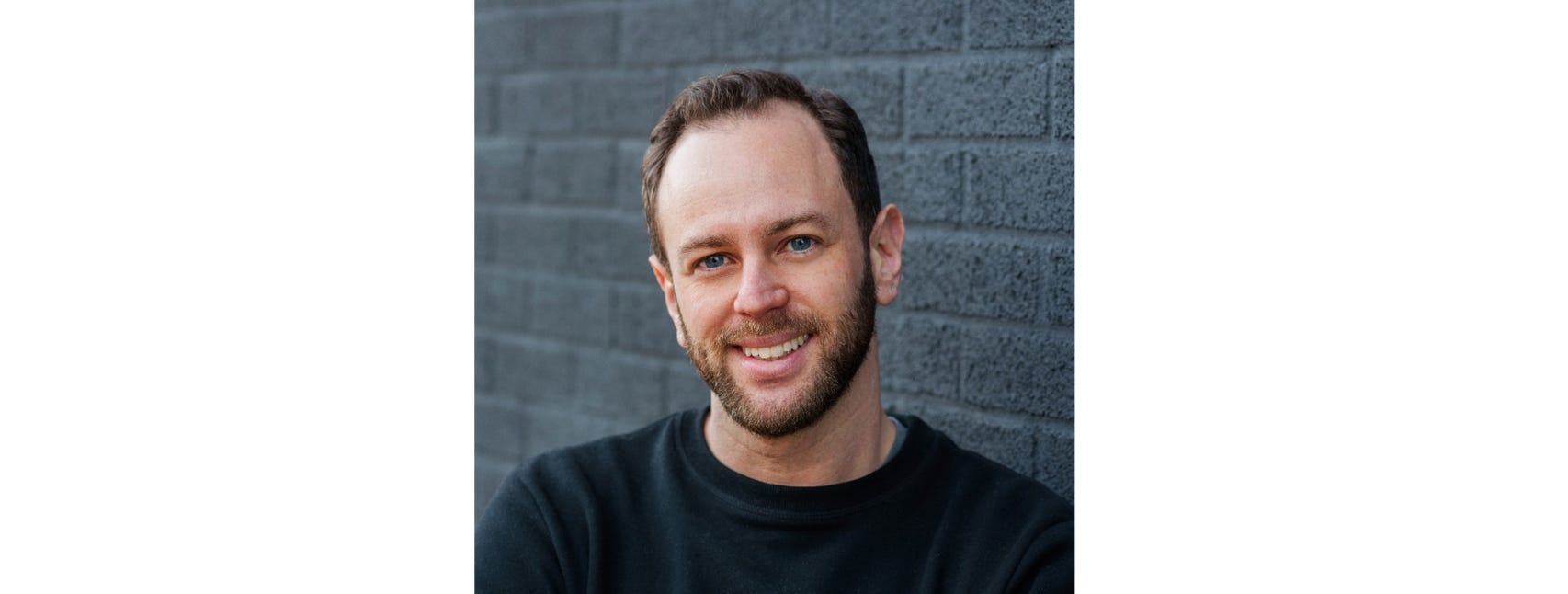
Freddie Pikovsky is the founder of Last Human, a placemaking and creative studio built around making places, brands, and experiences that preserve human connection. Its flagship project is Barnfox, the work and retreat club in the Cannonball Factory in Hudson, New York he co-founded in 2017. He has spent his career building spaces and media for people who want to work and live differently: he opened DUMBO Startup Lab, one of Brooklyn’s first coworking spaces, in 2011, and founded Off Track Planet, the travel brand behind Off Track Planet’s Travel Guide for the Young, Sexy, and Broke. He is the co-author with Nicole Caldwell of FARM + LAND’S Back to the Land: A Guide to Modern Outdoor Life (Chronicle Books), a collection of stories about slow living, sustainability, and doing things with your own two hands.
So I do this all the time, of course, in every conversation, I start with the same question, which I borrowed from a neighbor of ours, Suzanne Snyder, who runs the Oral History Summer School in Hudson. She has this amazing question, which I stole from her because it’s big and beautiful and great, but because it’s big and beautiful and great, I kind of overexplain it the way that I’m doing right now.
So before I ask it, I want you to know that you are in absolute control and you can answer or not answer any way that you want to. And the question is, where do you come from? And again, you’re in absolute control.
I’m originally from Brooklyn, New York. I grew up in Bensonhurst, Brooklyn in the 80s, which was a huge concentration of mobsters in that time in Bensonhurst, Brooklyn. And the reason I think that’s important to say is we grew up in a neighborhood that was very family and community oriented.
If you ask my mom, she was like, we liked having the mafia in the neighborhood because they protected us. If you ever had a problem, you can go to somebody and they’ll help take care of it for you. So I grew up in the type of neighborhood that it was almost like straight out of a Scorsese movie where kids on the block would play all night.
Parents knew each other and everybody felt really safe and protected. And there were a bunch of characters. And we all made up fun stories about that guy who sat on the porch smoking cigars all day and how he probably killed a few people and has a few bones in his closet and things like that.
But I grew up in this very tight knit community. I think it made a big impact on me as a person for the rest of my life. And my grandmother and our other family members lived in Los Angeles. And I remember leaving Brooklyn when I was about seven years old, which is why you don’t hear the Bensonhurst Brooklyn accent, although it tends to come out of me when I get passionate about it or I get tipsy.
Sorry, this is a really long answer to the question. But we moved to Los Angeles when I was about seven years old and we moved to the San Fernando Valley, which is not the cool part of L.A. It’s very, very spread out, very suburbia. And it was the complete opposite of what I experienced up until that point in my life, which was, people were very disconnected, no sense of community, very spread out. You didn’t really know who your neighbors were. And it lacked a whole lot of character as far as I was concerned.
So I longed for Brooklyn ever since I arrived as a seven year old in Los Angeles and eventually moved back to Brooklyn as soon as I had the means to in my 20s. So I think the reason I answer that question in that way is because I think those first few years of my life were really shaped by this unique time and place. And that’s been my perspective on the world is living in this very tight knit community where everybody knows each other and looks out for each other.
And that’s been a big impact and shaped my view of the world since I was little.
Yeah, it’s amazing. Do you have a way of thinking about what does it mean to be from Brooklyn? When you say that, what does that feel like?
I feel like it’s always been a cool thing to say. I’m very proud of it. And even my wife will tease me.
She’s like, yeah, you grew up in L.A. Like, don’t lie. And I’m like, I try to downplay the fact that I actually did kind of spend most of my life going to school in Los Angeles because I as a person identify as a Brooklynite, even though I spent a lot of my formidable years in Los Angeles. And I have great friends that I obviously grew up with and went to school with in Los Angeles and still stay in touch and visit all the time.
But I never felt that it was my identity. I never identified with the culture of Los Angeles. I always thought they were a bit soft and lacked — not everybody. But there was a lack of character unless you were trying to be a movie star or something like that. I never. Yeah, I was just not my vibe.
Yeah. Well, my daughter’s nine. And so seven years is a lifetime. Do you know what I mean? So those early years are really powerful. So I appreciate hearing that. I believe you when you say you’re from Brooklyn.
Yeah, when I get passionate about something, though, the Brooklyn really starts to come out and start waving everywhere. I should also mention, we’re Ukrainian Jewish immigrants. So I was the first in my family born in the US period. I have many cousins now younger than me, but I was kind of the first one here.
So we were Ukrainians. We were adjacent from Brighton Beach, which is known as Little Odessa, with families from Odessa in the Ukraine. And so it was a melting pot of Ukrainian Jews, Italians, Greeks. So that vibe has always been a big impact on me. Yeah.
So you’re in L.A. What did young Fred want to be? What did you want to be when you grew up? You have a recollection of.
I still find myself asking that question. What am I going to do? Who am I going to be when I grow up?
Yeah, I would say my path is zigged and zagged a whole lot. Again, I grew up with parents who grew up in the Soviet Union and like typical immigrant parents who come to the U.S., they expect you to choose a path, doctor, lawyer, accountant. Those are basically your options.
And I was not a good student. I definitely leaned more in the direction of being creative and entrepreneurial. I always kind of liked coming up with my own little projects and things.
And so when I graduated, I will barely graduate high school. It was time to go into college. I try to do all the things that you’re told to do and go to college and pick a career and things like that.
So I try to do all those things. I went to community college out of high school, but my interests kept kind of taking me in other directions. And I tried a lot of different things. I’ve done everything from working in the music industry in L.A. for a period of time. I was actually even a Hollywood extra for some period of time. It was a gig job, but dabbled in a little bit of that and started businesses when I was very young, without having absolute clues as to what I was doing.
But essentially, I didn’t have the type of guidance from my parents that benefited a personality like me. And then also, I think growing up in the U.S. and my parents were not familiar with that sort of entrepreneurial culture here. I mean, I don’t think entrepreneur — the word didn’t really even exist in their lexicon.
So it was a lot of figuring things out for myself, basically. Yeah.
Yeah. I feel like that’s how I met you. And this is the next question I always ask is sort of catch us up. Where are you now and what are you doing? And I got to know you here in Hudson and in Bard Fox and as a real entrepreneur. And so tell us, where are you and what are you working on now?
So in my journey, I’ve had a number of entrepreneurial projects, some successful, some not. And eventually, I, like many folks, when I came back to Brooklyn in my 20s, I worked on a bunch of different projects and ended up in a similar place as many folks in the city where I eventually got burned out on hustle, hustle, hustle and started to feel inspired by going upstate and made friends with somebody in Brooklyn who also wanted to invest more time and energy in upstate. At some point along my entrepreneurial journey, I started a coworking space in Brooklyn.
In 2018, I started thinking about the idea of what if there were coworking spaces in upstate New York that were an escape for people from the city if remote work was to grow as an accepting way to do things. And in 2020, I opened up the first coworking space in Hudson called Barn Fox. And our launch party was two weeks before we were all told to stay home.
So COVID obviously started. And yeah, essentially, in that moment, it was a lot of questions in the air as to what was going to happen next. But I had this gut feeling that we put our eggs in this basket of remote work would help our business. And obviously we’re like, well, in the grand scheme of things, this should be helpful to what our goals are here with this business.
And I guess almost seven years later, we’re still here. So it’s grown and it’s grown, especially in Hudson. It’s been our most successful location. We were up to four locations. We’ve actually reduced our locations, but Hudson’s always been our best performing location. And it’s grown a lot. And obviously we’ve grown into the Cannonball Factory, which I essentially took over the whole building and now do a number of other things in this building.
So yeah.
What was your discovery moment with Hudson, of all places upstate, to plant that first location? What was your first experience of Hudson?
So one of my previous businesses was a media company, digital media company, and we actually got a publishing deal. It was a travel blog that got really popular and turned into, yeah, a pretty popular website for backpackers, actually.
Oh, all right. Yeah. What was it? Do you want to mention the name of it?
It was called Off Track Planet. Oh, play on like the millennial hipster Lonely Planet. And our thing was a travel guide for the young, sexy and broke.
And it was really popular on the web. And then we got a publishing deal. And Urban Outfitters around the world carried our book in all their locations.
And the way that’s connected to Hudson, to answer your question, is eventually we dissolved that business. I was no longer young, sexy and aspire to be broke. So we had to move on. And I actually used the fact that we had five books published to get my own book published, which was a book called Back to the Land, a modern guide to outdoor life.
Yeah.
And I used the advance for that book to basically figure out for myself how I wanted to transition my lifestyle from the urban setting to a more rural setting. I knew I was tired of living in the city, but I didn’t know how living outside of the city looked for me. So I used that as an excuse to write a book about all the different ways other people had left the city to start lives. And so in doing that book, I got the opportunity to spend a year traveling around the US and meeting up with a lot of interesting people.
The book was divided in different sections based on landscape. So it was like desert landscape, countryside, mountainside. And so obviously, I spent a lot of time exploring things in the Hudson Valley.
And I stayed somewhere outside of Hudson. At that point, I had no recognition of what was what around here. And so I think we stayed at a campground or something. I think it was in Cairo, actually. And we saw that there was a cool coffee shop in this little town called Hudson, which ended up being Moto.
I think MOTO was like first year being open, it was like 2017, 18, something like that. And that was my first time driving into Hudson. And I’m a big car enthusiast and motorcycle enthusiast. I own motorcycles and stuff like that.
And I just thought the vibe of Hudson — I felt it related to a lot of my interests. And I appreciated the architecture and ended up spending half the day here, just kind of walking around and taking it in. So later on, when we had the opportunity to start Barn Fox, I just gravitated towards Hudson. It felt right for me.
Cool. I’m so curious about that book. So as I understand it, it was profiles of people that had already done this sort of moving from the city to the rural. What did you learn in that process? What did you discover about that back to the land?
I think for me, I’d only lived in urban landscapes, these big cities, Los Angeles, New York. And so the idea of leaving that was very scary, and a lot of unknowns. So I think doing a book like that allowed me to make sense of it.
Just experiencing the fact that many other people have done it, and they’ve created a happy life for themselves, made it less scary for me. I literally was like, am I moving, in my transition, to a lifestyle where I’m just living off the land and I’m growing out? Am I starting a farm? Is that what I want to do? It was a new, like, maybe a crisis, but I was trying to figure out a new identity in my life at that point. And I didn’t know exactly what it looked like. I just was different than what I was used to. Turns out, I like many modern conveniences. I just don’t necessarily like as much hustle bustle.
And it goes back to what I was saying about community and my experience as a kid in Brooklyn. I think when you live in New York City, especially New York City, everybody’s very into themselves and their goals and missions, which is great. And it’s inspiring when you’re very motivated and have a lot of goals in your life. But it’s the type of place where you can end up feeling very lonely because everybody’s kind of focused on themselves. You’re surrounded by a lot of people. And so you don’t really have many deep relationships. And that’s what I was missing in life.
And I felt like moving to a smaller place got me back to having a sense of community. And also, you can say that same thing for Barn Fox, which was the motivation. And I think what appeals to me in creating and running a cohort in spaces, it’s a community within the community.
So I think that was the biggest appeal for me, was to just kind of be back in a lifestyle where you actually knew your neighbors and felt like there was a support system. And there were real relationships that weren’t just surface deep. And you weren’t surrounded by people that were just purely focused on their goals and achievements. There was real care for their quality of life and one another.
Yeah. I’m curious where you first discovered co-working as an opportunity. How did you get into it? How did you identify it? What was the thing that happened that made it what you were going to do? What did you notice that made it something that you wanted to do?
It was like many great things. It was an accident. So going back to the backpacking media company that I first started with, so I found myself when I moved to Brooklyn in my mid 20s, broke as shit, and all I knew is I was obsessed with travel at the time.
I was able to sell my first little business in my early 20s and I used that money to travel the world. And I was obsessed with backpacking and travel. I just wanted to do that for a while and realized that there wasn’t a travel resource that related to us hipsters at that time. It was like Lonely Planet was a book published for hippies of the 60s and 70s. And it was time for a new thing that was digital and mobile and all that stuff.
So I was living in a hostel and I started this travel blog, and I kind of got in the mix of the VC world and I was trying to figure out how to get investment money to build my company. And as my website was getting more and more popular, I ended up going to something called a coworking space along that journey. And in New York City, this was 2008, 2009. I think WeWork, it was like one location or two locations. And there was another — I can’t think of the name of it right now. But it was another coworking space.
So basically, if you were in the startup scene in New York City around that time, there were like a few hubs where everybody kind of gravitated towards that functioned like coworking spaces. And it was a place where investors would come. So they created these incubators and accelerators and things like that. So that was the first time I had witnessed something like that.
Eventually, I was able to get some funding. First time I was able to raise some substantial money for Offtrack Planet. And I thought, to me, the coolest neighborhood to work in at that time anywhere in New York City was Dumbo. I just love my big river and bridges guy. Love me a good river and a bridge. So I just loved it.
It felt like a neighborhood out of a movie. And it’s become so much one of the most photographed places and filmed so often now, but in 2008, 2009, it was pretty under the radar even at that point. So as soon as we got some funding for Offtrack Planet, I moved into an office in this converted factory building. And we had a little team.
And as our little business grew and we were able to get a little bit more funding, I got overzealous and just started renting bigger and bigger office spaces to the point that I couldn’t afford my own office space. At that point, we weren’t even making money. We were just spending money. So as the money was burning, it was kind of like, oh, shit, we need to find a way to make some real revenue.
And we had a bunch of empty office space. So I said, why don’t we just slap a coworking space on our office and invite people to work out of this space. And that’s exactly what happened.
We ended up opening up essentially the first private coworking space in Dumbo at that time. There was a few other variations of a coworking space, but not truly. This was like a big lofted community type space. It was called Dumbo Startup Lab, which we officially launched in like 2010.
And to me at the time, I looked at it totally as like this side hustle to my main project. And so I was kind of doing these two things. I was managing and operating this coworking space, Dumbo Startup Lab, while focusing on my travel media company.
And I loved running the coworking space. But to me, I was like, yeah, that’s helping pay the bills. But my passion thing is the travel media company.
And then, of course, in hindsight, WeWork ended up getting gobs of investment money and coworking in New York City just kept blowing up, blowing up. And I had my attention in a different place. I sold Dumbo Startup Lab at some point as the media company was kind of getting more investment money.
And in hindsight, it was kind of like Dumbo Startup Lab could have been the golden ticket. I don’t know. But down the line, eventually the media company did shut down.
And I thought, that coworking business was really great, actually. I really liked it. And I enjoyed the day to day of it.
Whereas the media company was something I was passionate about. I was stuck in front of my computer all day. And I’m a pretty sociable, extroverted person.
And I’m like, I actually really liked the day to day of that business and thought, maybe I could try that again. But New York City was saturated with coworking spaces by that point. So I looked outward.
What do you love about it? Where’s the joy in it for you, the coworking space, Barn Fox?
I think I realized I just really like hospitality. Like, I like to schmooze. I’m a big schmoozer.
As you can tell, I’m long winded. I like to talk. And again, going back to community.
I’m a relationship builder. I’ve always kind of naturally been a good connector, when I meet folks and get to learn who they are and what they do. And I try to connect the dots and say, oh, you should talk to that person. So I think I’ve been just naturally kind of like a connector of people always.
Also, as I mentioned, I was a bad student. I ditched school and I was the host to many ditching parties. I kind of liked being the host of gatherings. I don’t know that I knew that.
Wait, hold on. I just need to take a minor time out. You need to introduce to me the idea of a ditching party. I understand ditching and I understand party. I didn’t know that they ever really come together into one event.
Well, we used to call them kickbacks. We were like, you want to come to my house and kick back? Yeah.
But it’s like a bunch of the link juvenile delinquents who are ditching school and we needed a place to hang out. And we were latchkey kids. Like our parents were all at work.
So I was like, come over my house. My parents aren’t home till 6 p.m. So it was a place to hang out. Do all the things we weren’t supposed to be doing.
But I like being the host of those things. So I’d like to think I got started in this pretty early in summer. Also, another sidetrack to all this, another big influence in my life was I was a camp counselor for a few summers.
And I thought, co-working in upstate New York could look like a summer camp.
Right.
If we’re all working remote, we don’t have our bosses breathing down our necks. We can hang out after work and use the upstate landscape as our playground.
Yeah.
So that was a big part of Barn Fox was like, hey, let’s, after work, go kayaking. Let’s go have drinks. Let’s go hiking. We did a lot of that during covid for sure.
Yeah, folks. I’m so curious about the development of Barn Fox, the name and the identity, from a like just building something new and fresh in Hudson. How did that go? And yeah, how do you feel about how it all has been going?
I’ll be honest, I guess I’ve always just had a very ambitious entrepreneurial perspective. And I always kind of hoped that Barn Fox can be huge, like many locations, like the sky’s the limit. So we grew to four locations within a few years and we were never able to, as a business, break through this scalable model.
And at some point, I really just decided let’s not focus on it being this mega, mega corporate business. And let’s focus on what it is that we have now and make it as great as possible. And so I feel very lucky I created something I really love because I think as an entrepreneur, you create a business for certain reasons.
Sometimes it’s money, sometimes it’s ego or whatever it is. I started Barn Fox primarily focusing on what is it that I want to do every day when I wake up? How do I want to spend my day?
And Barn Fox has been a lot of what I had hoped it would be. So I think Hudson’s always performed the best. I think there’s a few reasons for that, but I would like to think that one of those reasons is, I’m in Hudson most of the time.
Yeah.
And so I play the community manager here, and I think it’s really important to have a community manager in each location that wants to connect with everybody and have relationships. It’s what brings people in and makes their day much better, I think.
Yeah. So you’ve also been doing lots of other stuff, too. The Cannonball Factory, can you tell us a little bit about, yeah, where you are with the Cannonball Factory and sort of what you’re up to these days? Because I know you have another project that’s coming, right?
So, yeah, the Cannonball Factory came about a few years ago. I guess it would be good to tell a little bit of the background of the building.
Yeah.
So when I moved to Hudson, the Cannonball Factory was the Etsy space. I was under the impression, and I think many people were, that the co-founder of Etsy lived somewhere around here. And I was under the impression he owned the building because he could.
And the whole building was full of Etsy employees. And when I first opened BarnFox, we were in a small location on Warren Street, which is now Playpop. And I realized we needed more space.
People wanted private offices. People wanted more private spaces so the space was more functional. I was like, God, if that Etsy building was available, it would make the perfect space for BarnFox.
Turns out somewhere along the COVID timeline, I got word that we had a bunch of Etsy employees come to us for membership and we have our own building. Why are you coming to me for membership? Turns out the Etsy guy doesn’t own the building.
He leased the building and canceled it, at least because they started a remote work policy and a lot of folks moved away and this became a big expense, unnecessary expense for them. So I immediately found out who the building owner was and we moved into one floor of the building, like a month later. And my dream of moving into this building came true suddenly.
But we were just on one floor, and even one floor was much more space than we had at the time.
And the rest of the building was— It’s a stunning building. What do you know about the history of that building? Was it, in fact, a cannonball factory?
So the story that I’ve been told by—
In Hudson, nothing is actually true, but the stories are great.
Yeah, it’s great. There’s debates online about — I think there’s a record of it being built in the late 1800s, like 1880. And there’s people who are like, it can’t have been a cannon. They weren’t making cannonballs in 1880 and stuff like that.
So the story that I got from the owner was that the actual basement where the cannonball market is now was indeed a place. What would you call a place that makes cannonballs?
I have no idea.
But it’s where they actually—
A foundry?
It was a foundry.
Yeah, it was a cannonball foundry in the 1700s that had burned down. And the actual basement is still the ruins of the foundry. And then eventually someone came along and built a building around it.
I see.
How true is that? I don’t know. It’s a good story. But that would explain why they call it the cannonball factory, even though the building was recognized as being established in the late 1800s. And this factory has been famously textiles, it was a mill, I think at some point it was actually the original mill — the first houses in Hudson were milled in this building. And then I did find a news article from, I think, the late 90s, early 2000s that referred to it as the cannonball factory. So.
So there you have— It’s a beautiful, beautiful building.
The wood floors — the Etsy co-founder Rob Kalin himself, I think, polished the floors when Etsy moved in. And a lot was done with Rob Kalin, who I’ve never actually met. But he and the owner, current owner of Campbell, he bought it 20 years ago when it was in disarray. But they together kind of brought it back to life.
And we’ve done a lot of stuff, too, since we moved here. But I have to admit, a lot of stuff was kind of built for us when we moved in.
Yeah, my experience was it was sort of vacant and then it was Etsy and then you were in it and you’ve really just brought it to life. What you’ve done with that space is really quite, quite amazing.
Thanks. Yeah. So I guess, to kind of bring it to where it is today, a few years—
So we were the only folks in the building on one floor because— sorry, the fashion retailer was on the ground floor, but that was always kind of like a temporary thing. So they eventually moved out and it was just us. And the owner just came to me one day and was like, oh, by the way, I’m listing the building for sale.
I’m like, what? We just invested a bunch of money in our lease and the space and everything. No, no, no, it’s going to be fine.
So that obviously stressed me out. And fortunately for me, there were no offers. They listed the price of the building quite high.
And I eventually just sat down with him and I said, look, I think BarnFox has an opportunity to grow into the rest of the building. And I have a vision for the ground floor. I think the ground floor can be sort of a market space, essentially.
I thought about like a very miniature Chelsea market to Hudson, something that had a few food vendors and some retail and a farm stand. And that was the vision, like, less than three years ago. I think it’s been officially like two years, actually less than three years. It’s been two years since we basically made that agreement. We essentially partnered up on my ability to run the building.
So I got to say, it was one of the few times where I had a very clear vision that completely worked out the way I had thought it would. And pretty fast time, too.
So BarnFox ended up expanding into the building and opening up many offices and the offices all filled up and there’s hardly been any turnover. It’s kind of hard to get an office, actually, at BarnFox, which has been great for me. They’re always busy.
And then my vision for the market, Yummy Kitchen, who is a very, very popular lunch place, food truck in town, I’d pass by them on the hottest, most humid days in summer. And they have this little truck with smoke coming out of everywhere you looked.
And I’m like, how are they doing this? It’s crazy. All we do at BarnFox is spill the tea about what’s going on around town and who’s opening up this and what’s going on with that.
So we all talked about Yummy Kitchen and how they’re so good. They need to get a bigger space. And so as soon as I sort of had carte blanche to do what I wanted in the building and had this vision for the market, I went straight to them and I said, listen, let me offer you a sweetheart deal and get you into our building.
And I kind of sweet talked them into moving into the building. I thought we’ll help them set up a kitchen here. And obviously, I knew how popular they were and that would help bring folks to the space.
And I thought, even though we’re around the corner from Warren Street, Yummy Kitchen will kind of bring a lot of folks to the building, which would expose us to be able to do other things in the building. And that’s kind of how it started last year with Yummy Kitchen.
Wow.
Yummy Kitchen was exactly what you said is an amazing food truck in which you just felt a lot of compassion for these humans crammed into this place hot as hell and making delicious food. And so you really created this really amazing center off of Warren Street to get lunch, which we didn’t really, didn’t have anything like it before. And yeah, it’s amazing. I didn’t realize that it’s only been a couple years. You’ve done a lot in a very short amount of time. I am curious to hear about Lev & Ida’s. There’s definitely a story there, right?
So I was actually like the next thing. Yeah. So that was kind of the expansion of the market.
It just started off with, if you went into Cannonball Market last year, it was like Yummy Kitchen. And then the rest of that ground floor was like a mess. It was just like a storage space for stuff in the building.
And so obviously my vision was not complete, but I was trying to get another food vendor to open up right next door to Yummy that would be complimentary. And I spoke to a lot of business owners around the region who were established and doing something like a deli or a sandwich shop.
And for one reason or another, I couldn’t convince folks to move in. They were all a little worried about expanding, the risks of expanding to another location. And I don’t know what just flipped a switch in my head and decided screw it.
I’ll do it. I’ll open up a deli sandwich shop across from Yummy Kitchen. And I remember telling my wife about it and she’s just like, what, why would you want to do that?
And I’m like, it just made sense in my head. And so I told you my life and career has zigged and zagged. At one point I did go to culinary school for one year in my early twenties.
I went to culinary school and I had a cafe. That was that first business that I sold and made a little money with. But I promised myself that I’d never get into a food business again.
Cause it’s just really, really tough. And then I learned that you forget everything after 20 years. So I decided 20 years later, I’m like, well, I’m going to start another food business.
So yeah, I decided I will be the person that opens up a food stall next door to Yummy Kitchen. And I think it came very natural to me. It made perfect sense.
I wanted to start something that was based on my Brooklyn influence and my grandparents and my background, and creating sort of a Jewish Brooklyn inspired deli just was like a no brainer to me. Named it after my grandparents. I thought it would be a great namesake thing to do. Lev passed away about eight years ago, but Ida is still with us and coherent and she lives in Los Angeles, but I was really proud and happy to be able to say like, hey, I’m going to open up a sandwich shop in your honor and your name, and made her really happy and my family really happy.
So yeah. And in less than three months from idea to launch, we opened up Lev & Ida’s.
Amazing. How long has that been open then, you said?
It’s actually, I think literally like a year, like this week, it’s like almost exactly a year. Yeah. So it’s been one year and it’s going great. Winters are tough, not going to lie, but—
I can imagine.
Yeah. But the longer we’ve been around, the better we’re figuring things out, and it’s been really fun and enjoyable. And yeah, I just say that we’ve expanded now Cannibal Market into Yummy Kitchen, Lev & Ida’s, we were able to get local vendors set up in that space to create the retail part, Letterbox Farms, a local farm, has a farm stand set up.
And then we just recently had Oyster Party that shucks oysters in our courtyard. So Lev & Ida’s, having that second food vendor, I think created more and more momentum. We also started doing these holiday pop-up markets.
And the whole space is bustling now. And I feel really proud and happy. It was like this vision that I had for that space two years ago is really come to fruition.
So I am really proud and makes me really happy when I go down there and I see it bustling with folks. It is a big, beautiful building that was kind of closed off to the community and to the public. And then now we get to share it with folks.
So yeah.
Yeah. Beautiful. Congratulations. And thank you, because it’s brought a lot of deliciousness into my life. So 2020 you opened, right? I’m curious what you’ve learned about Hudson. How do you think about what Hudson is and the role it plays? As somebody who’s thinking creatively and commercially about place — what have you learned over your time building businesses here in Hudson?
I just know from my perspective, like I moved to Hudson Valley to change the way I spend my time and my values, reprioritizing my values. And I love that the other folks that have moved here are of the same mindset. We’re all kind of valuing more of slowing down, of community and relationships.
And obviously we had this really weird, unprecedented time with COVID, which was just, yeah, it was unprecedented. It’s hard to come up with anything relatable during that time. And I think the dust has kind of started to settle in the past few years, but from what I’ve seen since I’ve been here and during COVID was, my thought was if people could work remotely, their quality of life would increase living in a place like the Hudson Valley.
And so my prediction was if more people can work remotely, they’d leave the city. COVID for the most part proved that right. And we saw a big wave of people come here in the first year or two of COVID.
And then BarnFox kind of saw people come and then sort of recede when everybody’s like, all right, you got to get back to work. But at that point, a lot of people got a taste of the good life. And there was kind of like a second wave, a year or two later in 2023, and the house market was still pretty good.
So people started to rearrange their lives to be able to move and live in a place like Hudson. And then now we’re in another kind of weird place for the last year or two. And it feels things have kind of been a little bit more in a standstill lately.
So all I know is that what my reasons were for living, for moving to Hudson and my purpose for living here has all been really fulfilling. And I’m happy to see that at least some of my predictions for people wanting to live in a place like this. There’s obviously politics around people moving to places like this and the price is fluctuating and all that kind of stuff.
But at the end of the day, it’s like, people can live where they want to live, where they can live. And obviously, it’s a beautiful place where you can kind of slow things down and be close to your neighbors. And that’s what it’s been. And I love that.
Yeah. What is next for you? What are you looking forward to?
Yeah. So the next big venture, like I need another one. I think I really enjoyed this process.
I think that one of the most enjoyable things since I started Fox has been the growth into this building in Hudson, into the cannonball factory, and kind of showing and proving that I’m not just a coworking guy, somebody who builds coworking spaces. Whenever I have a vision for something, I just kind of executed. And so my next big thing is kind of just offering that as a service, all the branding and creative side of everything, whether it’s barn Fox or Campbell factory.
I’ve also been hands-on with, so anything from the placemaking of a space, of a physical location, to the branding of that. I’m launching my own sort of studio, creative studio. It’s not very well defined right now, other than, Hey, I’ve done all this stuff. If you need my help in doing stuff like this, I can do that for you as well.
So it’s not officially launched or well-defined yet, but it’s essentially putting my services out there for hire for others. While I still am focusing on operating on Fox and cannonball.
I obviously get excited by new ideas, and then just seeing a vision come together is what I really love. And I’m calling it last human, in relation to community building and what it is to be human during a time of, obviously, AI and all these things.
Beautiful. Well, I want to thank you so much for accepting the invitation. It’s been great to, yeah, hear in depth the story of all this stuff that I’ve experienced on the street here in Hudson. So thank you very much.
Thank you very much for having me.


