


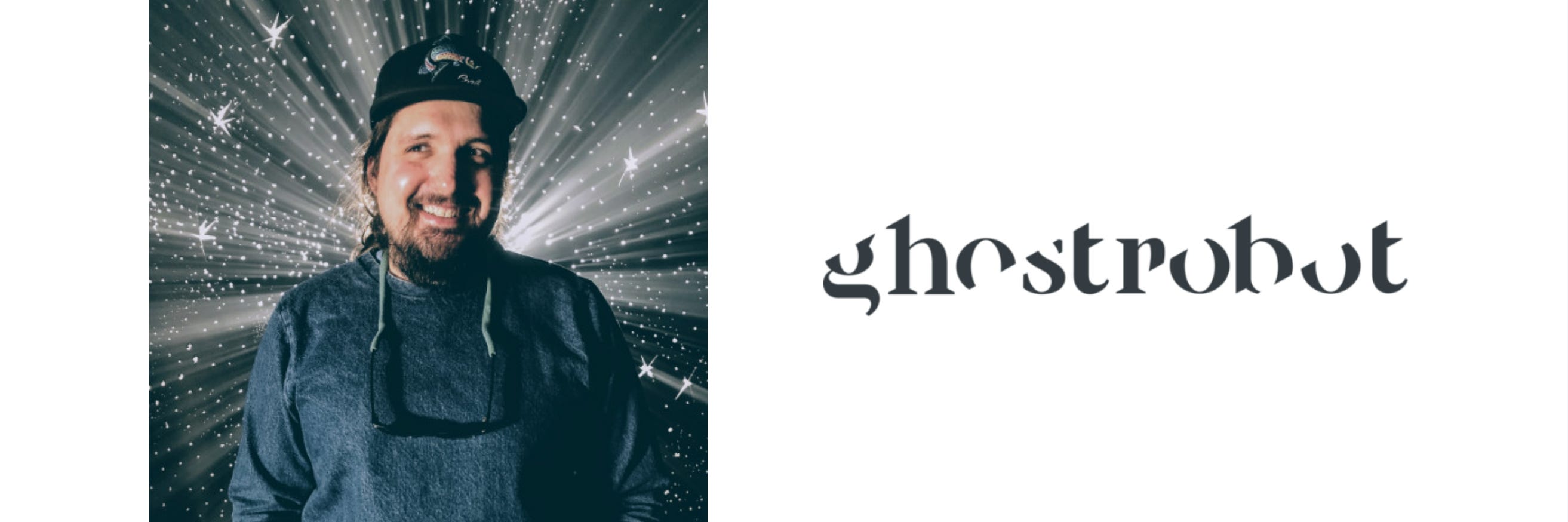
Mark DePace is Chief Creative Officer and a partner at Ghost Robot, a creative production studio in Brooklyn, NY, which he joined in 2005. He is the founder of Friendly City Creative Club, an advertising agency and retail space in Hudson, NY, and co-owner of Hudson Ferry Co. He is a visiting professor at Pratt Institute and President of the Hudson City School District Board of Education.
I start all of these conversations with the same question, which I borrow from a neighbor of ours, Suzanne Snider, of Oral History Summer School. And it’s a big question and it’s a beautiful question, which is why I borrow it from her, but I always kind of over explain it because it is pretty big.
And so before I ask it, I want you to know that you’re in total control and you can answer or not answer any way that you want to. The question is, where do you come from?
Where do I come from? I come from the Hudson Valley. I come from a family of progressive educators and a long line of proud Italian Americans.
Yeah. So we know each other in Hudson, New York. What is it like to be from, or what does it mean to you to be from the Hudson Valley?
I think what we experience in Hudson here is pretty similar to a lot of towns in the Hudson Valley and probably America in general have experienced, this post-industrial decline, urban renewal, reinvention. So there’s definitely a shared sense of history that I can feel and have experienced my entire life. And what’s nice about Hudson is that it happens on a much smaller scale than someplace like Newburgh where I grew up.
But I’ve always been fascinated with the history from where we live and all the amazing things that have happened and some not so amazing things. And also love the natural beauty of it, which I had to leave for a while and come back before I realized how special that really is.
What was it like in Newburgh growing up?
It was, let’s see, similar to Hudson, there’s a narrative about Newburgh that is very negative that a lot of people perpetuate. And I think when you grow up in an environment like that, you’re motivated to seek out all of the positive things. So it gave me, I think, a unique perspective of when somebody hands you what’s supposed to be a pile of garbage, you look at it and are like, well, no, there’s actually a lot of good things here.
And a lot of the things in my childhood growing up that felt like they were accidental or not intentional, I think were actually very intentional decisions made by my parents, who I mentioned were educators, and were drawn to Newburgh because at the time it was one of the first magnet schools in the country. And so it was a real experiment in, okay, what happens when you start funding public schools and giving people opportunities at a young age to try new things and explore new things and learn in different ways. And so the diversity that was there, the wealth of opportunities, the different types of just experiences that I had growing up, I think were really, really amazing and invaluable.
Do you have a recollection of what young Mark wanted to be when he grew up?
I always loved sports. So every child has the dream of playing sports for a living. That doesn’t pan out for most of us.
I don’t know, I was always interested in arts and literature and problem-solving and very project-minded, just loved a project and getting my hands dirty and figuring out how to make something or do something. And it took me a while to figure out what form that would take, but certainly toyed with the idea of being a writer or being even a teacher at some point, always focused around either literature or the arts in some way, shape or form. Outside maybe wanting to be a firefighter when I was really young.
I was also obsessed with firetrucks, which I still think are very, very cool.
Well, you’re in the right town also. It’s true.
It is true. It is true. And as I grew professionally, I think I gained a deeper appreciation for what firefighters do.
And when I was working on film sets, I came up with this analogy. It was like, being a firefighter is like, you’re a filmmaker and somebody says, hey, you need to go make this film right now. This is where it is.
And you’re able to just put it together just like that. It’s very similar in that there’s lots of trucks and each truck has a different job and each person has a different job. And when you look at it from the outside, you don’t necessarily see that, but they all know.
It’s like, hey, I’m the guy that when we get there, I park my truck here and I hook this hose up there. And then this guy does this and this guy does that. And it’s really, really fascinating to think about it in that way, as a system and a process and a procedure that’s been really fine tuned to the smallest detail.
Yeah. And so catch us up. Where are you now and what is the work that you do?
So right now I’m in Hudson, probably less than a mile from where you are. I mentioned I started as a filmmaker and that’s what I went to school for. And as I got into making films, fell in love with the short form part of it.
So music videos and commercials, and just followed that path for over 20 years. And as I’ve gotten deeper and deeper, keep uncovering more layers to all of it and have found myself becoming less intrigued just by the making of things and more intrigued in the reasons why and how, and what’s the purpose of marketing? What’s the purpose of advertising?
If we’re going to spend all this time and effort making something that’s supposed to be really cool, we should know that it’s going to be successful, or at least have a decent hypothesis about why it’s necessary to be doing what we’re doing. So I still have a studio in New York City called Ghost Robot, and post pandemic opened up a studio here in Hudson that is a sister company called Friendly City Creative Club.
Do you recall, was there a moment you got the itch to be a filmmaker, where you chose that as something to do? Where did that attraction—
So I took a video class in high school. And to be honest, I think the thing that really clicked for me was when I was learning how to edit and realized, wait a minute, I’m editing this video and I get to put whatever music I want against it, and love music and never realized that there is some professional utility to having a love for music, and just spending literally hours trying to find the right song and trying different songs against the edit and then editing the song. And I think when I realized that, I was like, oh, this is something that I’ve never considered as a career, but it actually takes all of these little things that I like and combines them into one.
And I like taking photos. I like making art projects and making props. And I like music and I like working with other people, that team aspect that I really loved in sports. And so it just became like, oh, I can do this.
And really, every single time I do a project, I get to do a little bit of something that I love. And I don’t need to write any more essays. Big motivating factor was like, how do I go to college and not have to read books that I don’t want to read and write papers that seem to have academic value, but not a whole lot else.
That’s funny. When did you first discover that, and maybe you just answered this question, but that you could make a living doing what you’re doing now?
Yeah, it was probably at NYU. I had some experience, had family members who worked in the industry and did pretty well. So I knew that it could be done.
And the great thing about going to a place like NYU is that you’re just in the thick of it and you’re exposed to tons of different people doing tons of different things. And there’s opportunities to intern and work on sets outside of school. And I really was motivated by that.
And I think by the time I graduated, I was more motivated to be out there working and meeting people than actually taking more classes or spending more time in school. So I graduated in three and a half years, wanted to just get out there and work and make things.
I’ve got two questions coming at once. One, can you tell us a little bit more about Ghost Robot, the work that you do, and then I’m curious about what those early years might’ve been like?
Yeah. So right as I was finishing up school, I met Zach Mortensen, who’s my partner in Ghost Robot. He was working on films in the city right around the same time, and we would work on projects together.
And then both, I think at the same time, realized we didn’t like working for other people and didn’t like busting our asses to execute on somebody else’s vision, and that we needed a platform to explore our own creative ideas and ideas of what creating a company looked like. The easiest way for us to do that at the time was a lot of music videos. So that was the early years, was tons of music videos.
Again, always loved music. So it was really easy and satisfying for me to reach out to up and coming artists and offer to do music videos for next to nothing and just see that grow and expound over time. And I think that’s one of the things I really liked about it, was just that you’re done with a project in four to five weeks.
The cycle of success and failure and experimentation was just a lot more rapid than it was when I was working on feature films. And that became a really big part of the Ghost Robot ethos, which was just try as much as you can as quickly as possible and don’t let your last project define you. The next project is just another opportunity to try something new and try something different. And that’s what we became known for.
And it’s also right around the time when digital media was becoming a thing. So all of these brands started finding, hey, now I need content for my YouTube page and content for my website and then content for Facebook and then content for Instagram. And so just our experimental attitude and nature and affinity for challenges made us a really good partner for that.
So that’s how we started getting into the branded side of things. And it just kept evolving from there. Like I said, we’re never very good at having other people tell us what to do.
So naturally it just kept leading to more questions like, well, why? How did you come up with this script? Why do you think this is the right commercial to make?
Wouldn’t it be better if we did it this way? And if you learn how to do that in a way that feels additive and not like deficit thinking, people start to appreciate that. And so that was the next evolution, was us being a thought partner for brands and marketers, being like, well, why are you doing this?
And what’s the real intention? And what do we actually need to do to help you achieve your goals? And that’s the current iteration of it now.
So partly that thought partner and then still the execution side of things, which I’ve always thought need to go hand in hand, when traditionally it’s really two separate processes. I think you gain a lot of value when you have the same team and the same people leading both exercises.
Yeah. I want to unpack that a little bit, or just spend more time listening to you describe that shift or the problem that you’re solving, that these things are often separate but should be together. And I just loved how you described your relationship style with the client. You were talking about asking lots of questions. Yeah. Can you just speak more to that?
Yeah. It comes from, there’s nothing worse than busting your ass on a project, which, even though it’s a job, if you really care about your craft and invest yourself in any creative endeavor, you put a lot more into it than what anybody can ever pay you for. So investing so much of yourself in a video and having it go on YouTube and three months later, it’s only got 300 views. That’s a pretty demoralizing experience.
So protecting ourselves in that way of being like, hey, we don’t want that to happen again. So we’re going to start asking more questions like, why did that happen? Where was the point of failure? And using that knowledge to make sure that it doesn’t really happen again.
And I think a lot of the breakdowns that we saw when other people were hiring us just to execute was that the through line from the initial strategic intent of this is the problem we’re trying to solve, and this is why this is the right solution, and the types of inputs that we’ve received on the way affirming those decisions, were totally lost or not even communicated by the time we were out there hitting record on a video camera.
And so if you think about that objectively, it’s like, of course there was a failure someplace along the way. So I think that just having that experience of being on the other side made us be like, no, if you’re asking us to invest and to execute, then we need to have a seat at that table and understand where this came from at the very beginning.
And even small decisions, even like casting or locations or lighting style, tone of voice, all those things that are very subtle and nuanced decisions that get made along the way all come from an initial strategy or creative vision, which can be very difficult to communicate. So again, just being there from the beginning really lets us make sure that what the final output is, is really tied to that initial impetus.
And is there like a client, a case study or a client story that you would want to share or talk about?
Let’s see. Well, I think some of the work that I still enjoy most recently was stuff that you helped us out on for Grow With Google, which is a great client of ours. That’s a social good initiative by Google to train the next generation of tech workers.
And a lot of it’s aimed at young learners. There’s an educational component of it. So it ties back to that part of me that I’m still very passionate about.
And they wanted to make people excited about careers in technology, and we wanted to actually talk to these people ourselves. So we did a little focus group here in Hudson, which you helped facilitate. And one of the things that we learned was that people don’t even know what these jobs are or what they mean.
So if they’re operating under the assumption that somebody is out there Googling, I want to be a data analyst, I think that there’s a failure right there. If the majority of the population doesn’t even know the words data analyst, let alone what it is, then they’re never going to have that realization. Like, hey, this is something that I can do professionally.
So that was, I think, a powerful experience with me, just being there and seeing it happen right in front of our eyes. Like, hey, we took this hypothesis that the client had, found a way to poke some holes in it. But more importantly, from that came away with a really elegant, creative solution.
And that turned into a web series called Job Hoppers, which I describe as the diners, drive-ins and dives of tech jobs. So yeah, that one was really nice, just because it was all the different pieces.
Yeah. And I’ve always admired your public spirit, and that project was, the Friendly City Creative Club, and this vision or idea you have for a community agency. Can you talk a little bit about what that can be, might be, could be?
Yeah, well, I’m still trying to figure it out. But it’s taken a few different moments of realization. You lived in San Francisco for a while, I live in New York City. I think when you live in a major metropolitan market, who you are and your community of people gets conflated with your professional identity.
It’s really hard to separate the two of them. And prior to moving to Hudson, I had an amazing network of collaborators that were also my best friends, and naturally would go to parties where you’re connected to other people professionally. And moving up here and halfway removing myself from that made me realize that, oh, the community that I built in New York City was really, really strong and really powerful. And I missed that.
And then being here in Hudson, realizing that I couldn’t necessarily do it the same way, the pool of professionals is smaller, it’s just not as big a part of people’s identities. I had this moment up here, within the first few years, of going to my kids’ baseball games and talking to other parents and thinking to myself like, nobody’s ever asked me what I do for work.
And it made me feel bad about myself. I was like, oh, are they not interested in me? Don’t they know that I do this interesting thing that’s really fun to talk about? But that made me realize, well, wait a minute, people’s values here are different. It’s not the most important thing about themselves. And who I am and what’s important to me is also shifting.
And so that was the idea behind opening the office here, was like, hey, I can still build a community and be connected to lots of different interesting people, but it doesn’t necessarily have to be just people that I work with. And at the same time, having relationships with them and learning about their life experiences can also provide value to my clients and to me.
And I think when you work in advertising, or any creative field, and you’re just in this bubble of, this is what we all think is important, or this is what we think makes good work, it’s really hard to figure out, okay, well, that’s not the way the rest of the country thinks, or the rest of the people watching these videos will think, and I need to work a little bit harder to get to know them and involve them in my work and connect them to my passions. And that was some of the inspiration here.
Yeah. And how has it been? How long has it now been you’ve had the space on Warren?
I had space on Warren Street for a little over four years, and met a lot of interesting people.
Describe it for people who don’t know.
Oh, so it’s a little, Warren Street’s the main commercial hub. Lots of great shops and restaurants. And we’ve got a little storefront that is half retail space, half working studio, which the original idea actually came from early days of Ghost Robot when we had a studio in Williamsburg that was street level.
And people would walk in off the street and just basically be like, what are you guys doing here? And so we joked about it, well, we should make stuff for them to buy. So we started to do that.
We made t-shirts. And my partner Zach was making graphic novels at the time. And we had these cool knit hats that everybody liked. And so made a little retail installation there.
And then we also used that as a vehicle for these theme pop up shows. So it would be like an art show with a retail component and the party where there’s a performance element.
So I really love doing that. And that was what I was trying to recreate here, was a space where anybody could walk in off the street, have a conversation, get to know us, we could get to know them. And just make sure that our day-to-day life wasn’t just staring at computers every day and talking to the same five, 10 people.
The more we talk to people and tell them what we do and hear about what they’re up to and what they like to do in Hudson, the more fulfilling our experience becomes.
The host of one of the best, I’m not sure I made it to the actual opening, but the show about the blue. Hudson has these legendary blue garbage bags that are sold in a vending machine on the main street. But you did a whole show. It was just amazing.
Yeah. A bunch of people repurposing garbage or using the trash bags as materials. The show is called Trash Talk.
And we had nearly 30 artists contribute pieces. I was totally floored by the amount of people who wanted to participate. It was a really great event.
This year we did a sticker show, which was artists designing stickers. That was a benefit for Friends of Hudson Youth.
So yeah, just finding different ways for people in the community to be connected by creativity and art, and keep us sharp when it comes to coming up with ideas and executing things that people aren’t paying us to do.
I’m curious about having been in the business for so long. The beginning of this conversation, I was really flashing back. I was wondering what music were you listening to when you were first editing in that high school video class? What was the soundtrack?
It ended up being a, I don’t know if you know the guitarist, John Fahey. He does, it’s all acoustic, really intricate acoustic guitar stuff, classical American modern interpretation of bluegrass or folk music. So that ended up being the song. I still remember that.
That’s cool. Yeah. And so my question, my curiosity is how have things changed? What kinds of questions do clients come to you with? You talked about being in the music video age and then digital age and now good Lord knows where we are now. If the question is, the more things change, the more they stay the same, what kinds of questions are clients coming to you with now?
Yeah. I think probably the biggest through line now is there’s so much content and opportunities to create content out there in the world that everybody feels compelled to do it, but doesn’t necessarily understand why. So you can make an argument that it’s not true, but if you’re a modern brand now, you need to have an Instagram channel and then you need to have content, and it’s very easy to just get sucked into that.
Like, no, we need more content. We need more content. And a lot of them just struggle with answering that question. Okay, what is the purpose of this content? What are we trying to get people to do? And how are we doing it in a way that only our brand can do?
It’s literally one of the conversations that I’m having with a client right now. And it’s like, hey, look, this is what your competitors are doing. And this is what you’re doing. And there’s nothing to distinguish the two of them from each other. So instead of focusing on what’s the next video that we’re going to make, we need to take the time to stop and pause and say, okay, if we’re going to make another video, how is it going to be different? And what is going to be unique about it that, again, only we can do.
So yeah, I think a lot of them feel that pressure and they feel the need, but sometimes struggle to answer those questions.
Yeah. And does that feel like a shift, that the abundance of content and the abundance of channel makes the purpose or the reason or the why more important than maybe it has been in the past?
Yeah. And I think just particularly now when the idea of organic discovery is shifting, and it’s less likely that people are just going to miraculously stumble on something that you’re doing. So you need to be much more specific and motivated about, okay, this is what we’re doing and this is how it’s going to reach people. And once they do engage with it, this is what we want them to do afterwards.
So it’s just becoming a lot more necessary to really think through all those steps.
Yeah.
You probably remember when digital first, video first became a thing, everybody wanted a video that went viral and just years and years chasing that, because if you could make something really cool, people would see it. And all of a sudden they would explode and give you lots and lots of attention. And it’s just really not the way things work anymore.
Do we have a modern version of viral? What’s the thing that people are chasing now? Is there like, what’s the contemporary holy grail that everybody’s chasing?
To me, I think brand voice has become a lot more important. And the brands that are being really, really successful have a voice and an attitude and a bravado that is just undeniably unique and infectious. And everybody looks at that and says, I want to do that, and don’t really understand that that took them years to do, and years of being consistent, and years of not being risk adverse.
So I think a lot of people are scared to do that. They’re scared to go out on a limb, or they go out on a limb and after a month or two be like, oh, but that didn’t work. And it’s like, no, you’re quitting way too early. You literally have to do it for years before it starts to make a difference.
Who do you think of? What’s a good example of the brand voice that everybody wants?
Everybody looks at Liquid Death or Duolingo had a moment where their TikTok channel was the talk of the town. Beyond Meat has a really funny Threads account. Yeah, those are some of the ones that come to mind.
This is so outside of my wheelhouse, all the channels and the media. How do you advise clients on this, on the various channels? You just mentioned Threads.
Well, we are still video first, although we touch a lot of things. So we’re still pretty YouTube and Instagram specific. We do a little bit of stuff on TikTok, but that’s not really our wheelhouse, mainly because TikTok is a little bit lower polish and a little bit more immediate and personal and raw, which isn’t really our style.
But yeah, so pretty much YouTube and Instagram forward.
Yeah. And what do you love about the work? When you think about all the things that you do, where’s the joy in it for you?
I really like solving the problems at the very beginning. One of my dirty secrets is that I really don’t like being on film sets anymore. It’s just a lot more compelling to me to get that initial brief from the client, and at that point where it’s sort of like everything feels possible, going through to the depths of creativity and imagination and working really, really hard to come up with a solution that is unexpected.
So that’s my favorite part of it, because it’s solving a puzzle and really making your brain work.
And what are you looking forward to when you look ahead for Ghost Robot? What’s on the horizon or what are you most excited about or concerned about?
That’s a good question. It’s taken me a really long time to be comfortable calling myself or embodying being an expert. And I think I resisted that for a very long time and always preferred to just be the person behind the scenes, trying to figure things out.
And yeah, got a coach and talked myself off that ledge, and really in the past year started putting myself out there more and really telling people what I think and what I believe and why I’ve been successful doing what I’ve been doing. And I think I’m excited to continue doing that and got over being scared to do it. So I’m hoping that, and it already has, paid some dividends, and kicking myself that it took me so long to learn that lesson, but excited to continue doing that.
And I think the fears were probably the same that everybody has right now, and that we’re all being asked to do more with less, and resources like time and money seem to be growing scarcer and scarcer. So it’s certainly a challenge to figure out how to keep up with that and maintain your professional standards and artistic standards. So just another problem to solve.
And how do you think about, do I want to ask that question now? I got two. So I guess what’s the role, I always selfishly want to talk about qualitative. What’s the role of qualitative or research in general in your practice? What’s the value of it? When does it show up? When does it not show up? How do you think about it?
Yeah, it usually shows up at the beginning, because I mentioned being risk adverse. Everybody wants there to be some evidence that they’re making the right decision. So giving clients the evidence and the confidence to pursue a bold decision is really, really helpful.
And again, it’s taken me a long time to learn that, coming from a place where, working with artists and auteurs, they want to believe that their genius and their intuition is enough to support important creative decisions. But moving away from that and using research to really support a creative decision is what’s needed to get to that next level of leadership and ownership over the trajectory of any creative project.
And to be honest, I wish we could do more of it. And just in this day and age where people are, again, trying to make things faster and invest less money, that part of it feels either disposable or unnecessary to them sometimes. In which case, there’s things that we can do ourselves. It’s definitely one of the things that I think AI can be very helpful with if you use it right, is doing the research and creating a body of work that supports where you’re going.
But outside of that, it’s also just, what do we see with our own eyes and what has our experience told us? And again, just speaking from that position of authority in a way that makes clients feel comfortable is the other part of it that I’ve learned too.
Yeah. And then the last question was really maybe just an open, how are you, I’m curious about AI, how it’s showing up for you, how are you incorporating it? What lessons have you learned? And maybe how do you even think about it? I feel like it’s such a strange thing that we all have our own way of, it becomes whatever anybody makes it for themselves. It’s a very personal thing in a weird way. So how would you describe your relationship with AI?
I use it every single day. I think my brain naturally moves pretty quickly. And I’ve always been the type of person that if somebody else isn’t doing something quickly enough for me, or hasn’t come to an answer by the time I decide I need it, I would just do it myself.
So it certainly helps me in that sense, in that I can iterate very, very quickly on things. And I mentioned that phase in a project where all possibilities seem endless and there’s lots of different directions that it can go. I think it really helps you hone in on a valid direction very, very quickly. And lets you explore all different corners of a room in a very short period of time.
So yeah, I think it’s really good for that. And to me, yes, it does replace some work, but it just helps you get to the meaningful work, where you need to be really precise and really considered, a lot more quickly. And I think that’s the part of it that is always going to be there.
Even taking something like designing a logo, which now we do a lot more of the design and branding side of things too. When we design a logo, I want to see a hundred different logos before I decide which direction we’re going to go in, and using a tool like AI to give you that breadth much more quickly before deciding, hey, these are the direction we want to pursue. And then I want somebody who’s really an expert in their craft to tackle. It just gets you there a lot more quickly.
So the one thing I have had to do is, it’s very easy to become overly reliant on it, and having that conversation with myself about, okay, which part of this do I really enjoy doing? Because I have found myself in moments where I’m like, oh, wait a minute, why am I replacing this thing that used to give me gratification just because it’s faster and easier? I’m just telling myself, hey, no, you enjoy doing that. It’s satisfying. Take the time to do it yourself. So everybody should ask themselves that.
For me, I learned that the hard way, you know what I mean? There’s only one way to learn that.
Yeah, that’s true. That’s true.
And then finally, we are co-hosts of Breakfast Club. We’ve been on a summer hiatus. And it’s been, I don’t know how long it’s been now. Has it been a couple of years, maybe? Of once a month, Breakfast Club Hudson, the Hudson outpost of Breakfast Club Industries. What’s that been like for you? It’s been fun to do with you. You do a lot more leg work than I do.
I think I’m just better at self-promotion.
Yes.
It’s been great. Like I said, I think the idea of community has always been really important to me, and it took me a long time, having to move and rebuild a community, to realize that I had been doing that unintentionally for a really, really long time.
So I had been trying to think of ways to do something like that. And I think always making it much more complicated than it needed to be, and thinking like, oh, there needs to be this performative element, or people need to do slideshows, or there needs to be a theme, all these things that in my mind make something conceptually sound.
But then you came with the Breakfast Club idea and it’s like, no, you just meet for coffee and you talk, that’s it. So I think that was also a good lesson where it’s like, hey, no, just do what you really want to do. You want to get people together, just get people together and people will show up, because I think everybody’s in that place of wanting that connection and wanting that community themselves.
So yeah, no, it’s been great. People really appreciate it. Met a number of really great people and the list of folks who are interested just keeps growing and growing.
Nice. Mark, thank you so much. This has been fun having a conversation and I appreciate you accepting the invitation.
All right. Bye.


